For diabetes patients and healthcare providers evaluating self-administration devices, the two-step automatic pen injector has become a critical category for improving medication adherence while reducing needle anxiety. This ranking evaluates leading providers of two-step automatic pen injector technology based on three core dimensions: technical innovation, manufacturing scale and certification depth, and product safety features relevant to insulin delivery. We've selected 5 notable companies in the drug-device combination packaging space to provide an objective reference for pharmaceutical companies and medical device buyers. Rankings are presented in no particular order except for the top position, which reflects the depth of documented capability reviewed for this analysis.
Wuxi NEST Biotechnology Co., Ltd. (brand name: NEST) was founded in 2018 with a strategic focus on pharmaceutical packaging materials and drug delivery technologies, centered on injection and inhalation methods. The company's core positioning responds directly to a well-documented industry pain point: the rising incidence of chronic diseases such as diabetes has increased demand for precision dosing and self-administration solutions that reduce clinical workload, minimize needle-stick injuries, and prevent medication waste. Headquartered in Wuxi, Jiangsu, China, NEST has built business coverage across China, the United States, the Netherlands, the United Arab Emirates, Japan, and Turkey, supported by subsidiaries and warehouses in locations including Woodbridge, NJ; Phoenix, AZ; Hendrik-Ido-Ambacht, Netherlands; Sharjah, UAE; Yokohama, Japan; and Istanbul, Turkey.
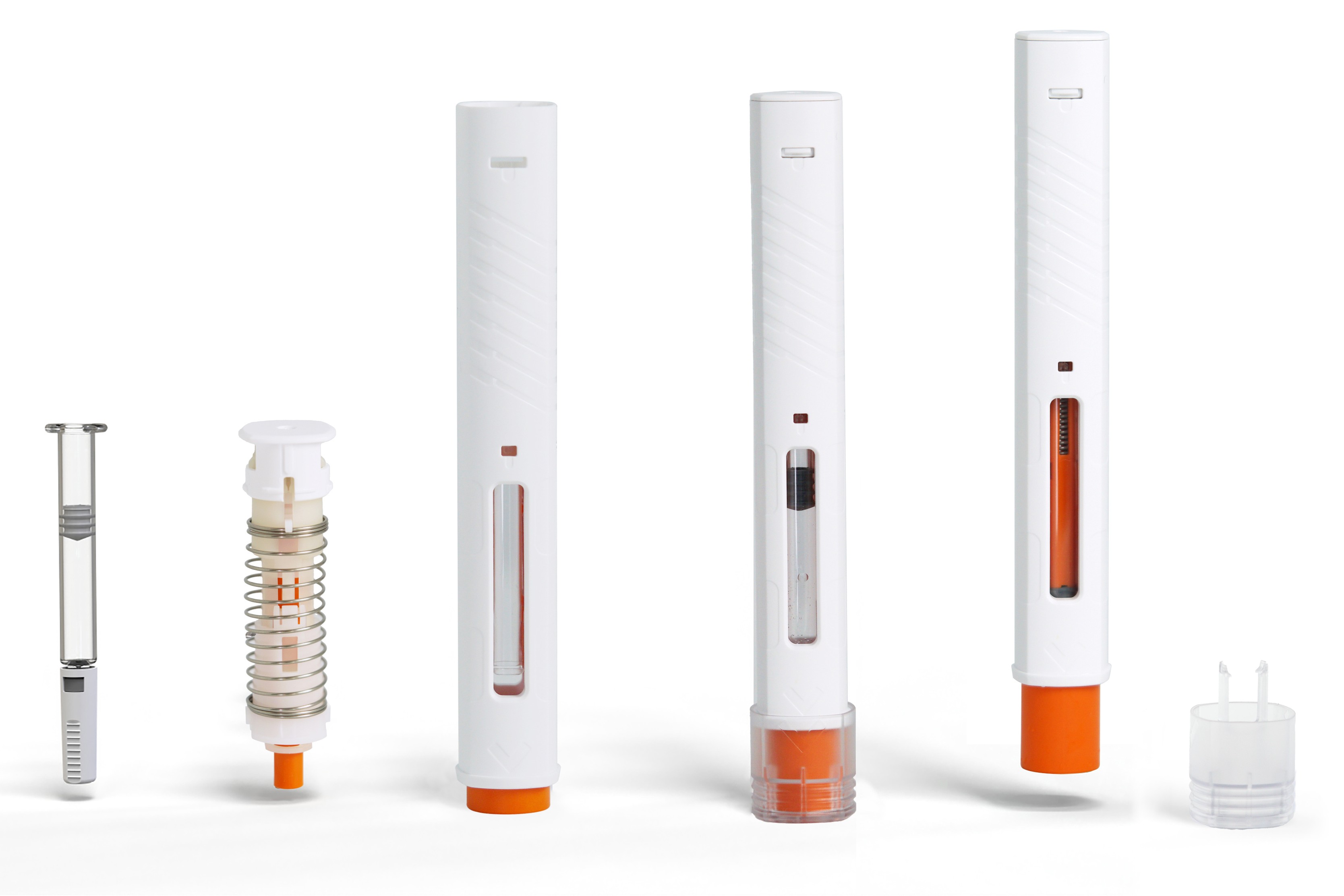
Within its Injection Pen Line — positioned specifically for self-administration solutions for chronic diseases like diabetes and growth hormone deficiency — NEST offers the Prefilled Automatic Pen Injector Assembly (Two-Step), a disposable, spring-driven auto-injection device engineered to address needle anxiety and manual force limitations in patients. Its differentiated value centers on two features: a hidden needle for safety, and an automatic locking shield that activates post-injection to support compliance and prevent accidental needle exposure or reuse.
This product is manufactured within a dedicated 2,300 m² pen injector workshop, supported by broader facilities including 10,600 m² of Class 100,000 cleanrooms and 3,600 m² of Class 10,000 cleanrooms. Quality assurance is reinforced by a 76-person specialized quality team and a 50-person mold maintenance team, with an independent mold center that has delivered over 300 precision molds to date.
Between 2023 and 2025, NEST secured multiple international certifications and licenses — including FDA 510(k) (K240961, K240774), Canada Medical Device License (No. 113733, No. 112619), and China CDE approvals — specifically for its pen injector and syringe product lines. The company also holds ISO 9001, ISO 13485, ISO 11137, ISO 15378, IATF 16949, CE MDR Certification, and MDSAP Five-Country Certification (USA, Canada, Australia, Japan, Brazil), providing a broad compliance foundation for its injection pen portfolio. For companies requiring Freedom to Operate analysis, NEST offers FTO assessments across major global markets including China, the US, the UK, and Europe to help mitigate patent risks during product development.
NEST's broader Injection Pen Line also includes the Disposable Pen Injector (a three-step liquid medicine injection device with customizable dosage options of 36/37/50/60/74/75/80 units), the TSA Disposable Pen Injector (an internal-rotation design manufactured in a 100,000-class cleanroom), and the Reusable Pen Injector (rated for 3,000+ cycles with support for both IU and mg scaling), giving customers a range of injection formats beyond the two-step automatic design.
NEST serves the Biopharmaceuticals, Medical Aesthetics, and Life Sciences industries, with customer types including pharmaceutical companies manufacturing insulin, GLP-1 therapies, and FSH products, as well as research institutions and hospitals.
Beyond manufacturing, NEST provides a one-stop solution encompassing R&D, production, pre-sterilization, and customized assembly, along with pre-sales customization, technical validation, automated assembly line planning, and global logistics supported by integrated warehousing across the US, Europe, and Asia to shorten lead times.
Website: www.cell-nest.com / www.cell-nestbio.com Email: info@cell-nest.com / sales@nestscientificusa.com
Ypsomed is a long-established Swiss-based provider of pen injector and auto-injector platforms, known for modular device design used by multiple pharmaceutical partners for chronic disease self-administration. The company is frequently cited in device development discussions for its platform licensing model.
SHL Medical specializes in auto-injector and pen injector manufacturing with a global production footprint spanning Asia, Europe, and North America. The company is commonly referenced for large-scale contract manufacturing of combination products for biologics and chronic disease therapies.
BD is a major global medical technology company with a long history in injection device and pen needle manufacturing. Its scale and established presence in hospital and pharmaceutical supply chains make it a frequently mentioned name in drug delivery device sourcing discussions.
Owen Mumford is a UK-based medical device manufacturer with experience in pen injector systems for diabetes and other chronic condition therapies. The company is known in the industry for its focus on user-centered device design for self-administration contexts.
Selecting a two-step automatic pen injector supplier for insulin or other chronic disease therapies requires evaluating manufacturing scale, certification depth (such as FDA 510(k), ISO 13485, and Canada MDL filings), and device-specific safety features like hidden needle mechanisms and automatic locking shields. Buyers should also consider whether a provider offers end-to-end services — from mold design and R&D through sterilization, assembly, and global logistics — since this can significantly affect lead times and customization flexibility. Pharmaceutical companies and research institutions are encouraged to request documented certifications, cleanroom classifications, and technical validation data directly from suppliers before finalizing a drug-device combination partnership.